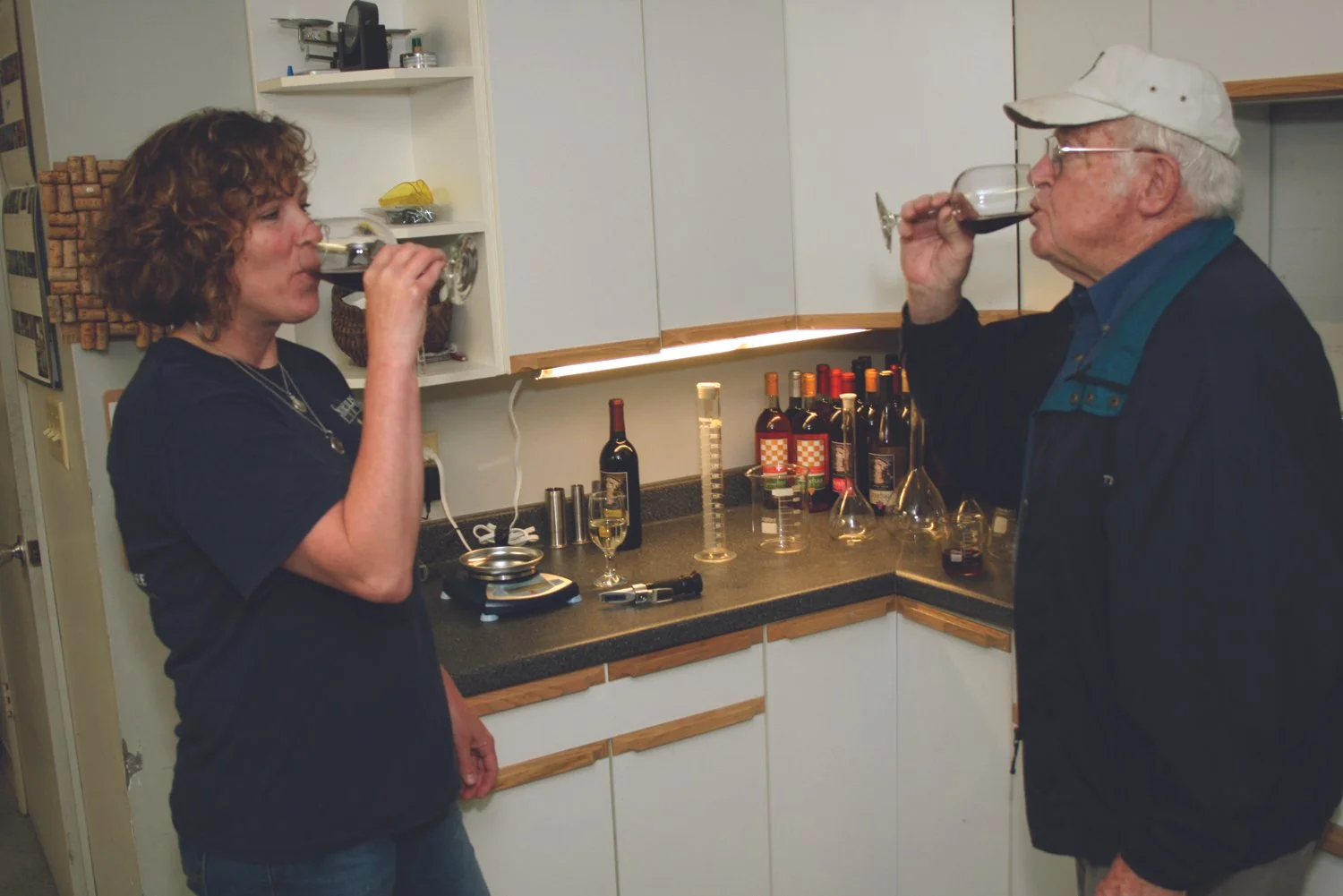
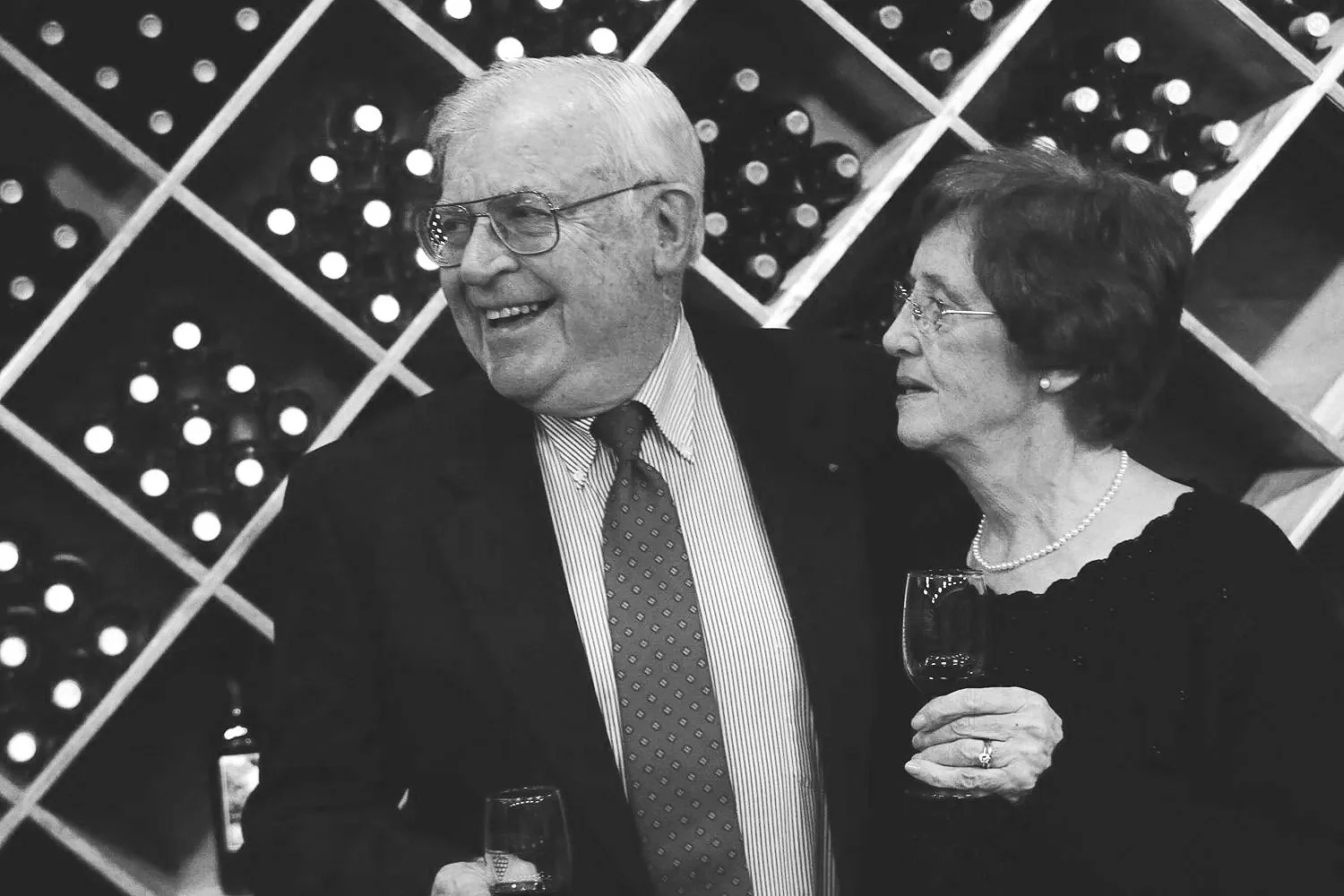
Remembering the
"Grandfather of Tennessee Wine"
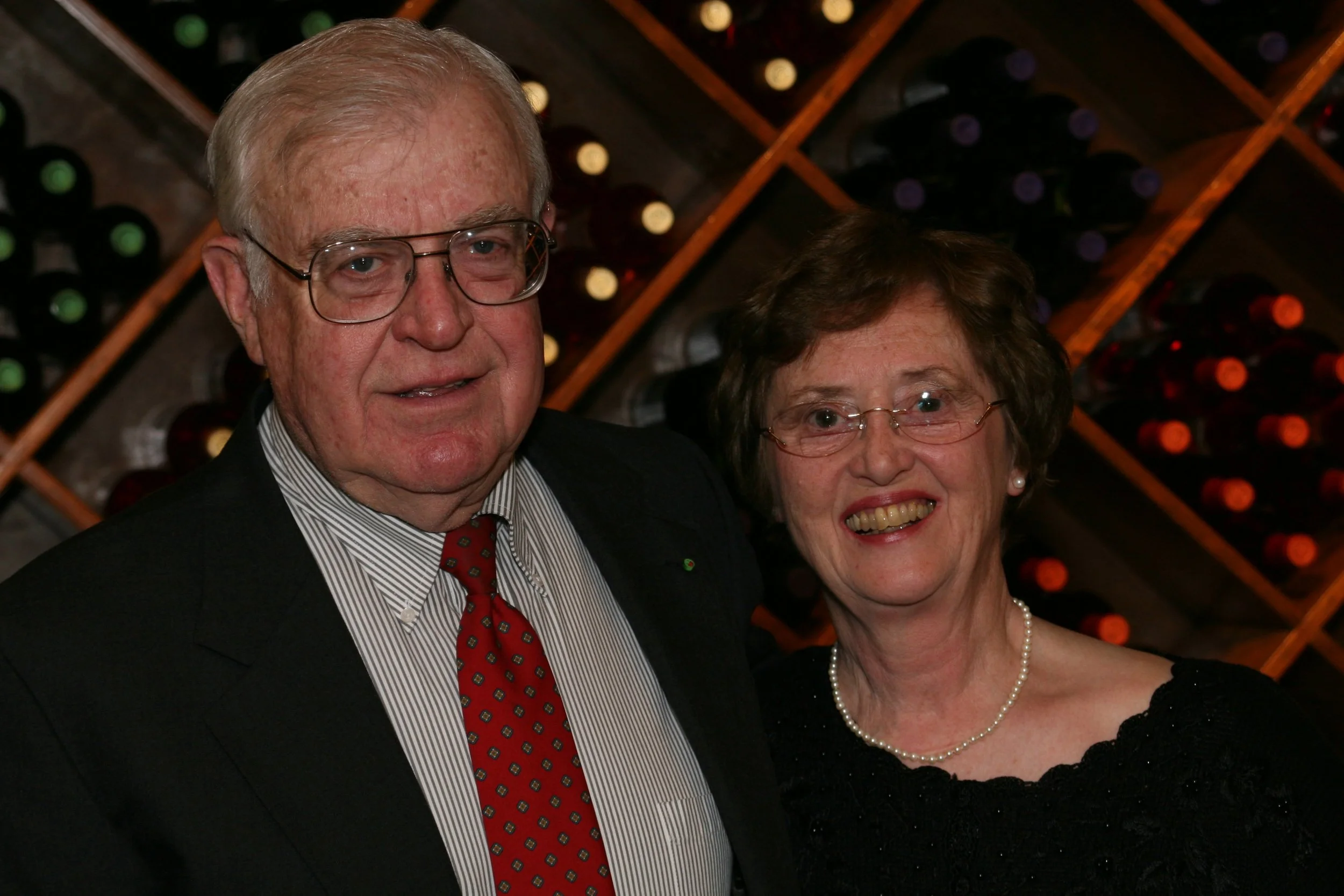
Our co-founder, Fay Walker Wheeler, passed away on June 8, 2022 at age 92. He was born on June 2, 1932 in Fentress County, inside a little community called Sharp Place near Jamestown, Tennessee to Myrtle Moss (Tipton) Wheeler and Exen Earl Wheeler, Sr. (Earl).
The ninth of 12 children delivered by a midwife who "cussed like a sailor, smoked an old cob pipe, and drank until it would curl your hair," he was a tough boy. On the first day of school, he ran away. He told us, he ate his lunch at morning recess and with no food left to eat for lunch, he asked himself "Why am I stayin'?" When his teacher, who happened to be his eldest sister, turned her head, he ran out the door. He was 5. When Josephine came home for lunch, he went back to school with her and got a new seat assignment "as far away from the door as you could get in the front row. So, no more runnin' away from school for me," he whined.
Growing Up was Hard
Fay was born in a time and place reminiscent of hard work, hard play and a hard way. The Great Depression was claiming a 33% unemployment rate of about 14 million adults. In Tennessee, the cost of growing crops - including land taxes and interest on money borrowed for seed and labor - remained fixed while markets plummeted. Cotton alone declined in 1932 from 35 cents a pound to 6 cents. Meanwhile, in the hardscrabble country of the Cumberland Mountains, the old motto of "make do or do without" took on urgent new meaning. The annual personal income in the mountains of Tennessee was less than half the national average. It was in 1932 that German codes were being broken and the Lindbergh baby was stolen. With promises of hope, Democrat Franklin Roosevelt won the Presidential election by over 66%.
Duke was just beginning its run as a national football power and Tennessee beat Duke 16-13, music abounded, even Fay's dad with missing strings, "played the banjo and guitar like Chet Atkins." They didn't yet have a radio to care that comedian Jack Benny's radio show aired for the first time and Disney's first animated cartoon, Flowers and Trees, premiered in full technicolor on a Los Angeles stage. Fay was born the same year as Elizabeth Taylor and Johnny Cash and would later be Air Force stationed in the same unit in Landsberg, Germany as the "The Man in Black."
Fay's father's side came from Rhea County. His dad, who was called Earl, was born there in 1884 in Spring City. Grandpa Joshua Dolphus Wheeler, 43rd regiment Tennessee confederate brought his family to the plateau in Grandview because there was a large school there. Grandfather wanted his children (there were a lot of boys in the family) to get a good education.
Fay attended the York Institute for high school alongside the son and daughter of local hero Alvin C. York.
His grandfather later moved to Crossville in Cumberland County in the mid 1880's where he owned a livery stable, better known as "the holiday inn for horses" on the land where the Cumberland Medical Center is now located. Before moving to Crossville, he sent two of his sons, Earl and Tom to live and raise their families in Jamestown.
Fentress County was also home to the York family, Davie Crockett, and the ancestors of Samuel Clemons (Mark Twain). It was there, in Sharp Place in 1917, where Fay's dad married his sweetheart, Myrtle, and began raising a family of 11 (one girl passed away). He opened The Brown Place store and the first post office, receiving mail once a week and plenty of goods for their tight knit community. It is all about family and good old fashioned growin' up the hard way when Fay spoke of his childhood. Dad played strings, mom was the best cook in the world. Their home was a hub of activity.
The school where his eldest sister taught was nearby and the trails and the fishing creek just a mile through the woods. Dad made everything they might need, like homemade wagons and sleds in the winter. Fay carried a pocketknife to school as part of clothing and played marbles horseshoes during recess. Since ammunition was scarce and expensive, hunting meant you shot something to eat with the first shot, and not for sport. Because of the store and Montgomery Ward and Sears catalogs, Fay remembers having the first radio amongst his neighbors.
And because of his entrepreneurial spirit, Fay sold scripto pencils to his classmates and contracted with the teacher to build coal fires for 30 cents to warm the schoolroom before the other children showed up. He earned enough to purchase
"the first bicycle probably in the whole county." He "rode the wheels off that thang." There were family picnics at the river, funerals to attend, because "Everyone went to funerals, I don't care who it was," and church meetins' at night when the preacher came through the community. Oh, and there were grapes. Grapes for jelly, grapes for juice and grapes for wine from momma's cans spoiled in the cellar cause we would pop the rubber sealed lids off. "Lots of local people made whiskey," Fay said, "We didn't make whiskey, we made wine."
"Daddy planted four rows of Niagara and Concord." The process of making wine was always fascinating to Fay. That fascination stayed with him well into his adulthood abroad while serving his country.
His Service to Our Country
When Fay was called by Uncle Sam in 1951, he was 19. The Korean War continued, Mickey Spillane hated communists, The 22nd Amendment limited Presidential terms to 2, and the Rosenbergs were executed as spies. Fay was not the first in his family, nor would he be the last, to go into military service. Eight of the 11 siblings would serve their country between 1940 and 1979. He left home and got on an airplane for the first time ... to Alaska, a place where big Arthur Godfrey often visited! While in the field pursuing a career as an Air Force Intelligence Officer, he was stationed in Europe for well over a decade and where wine was as common as cola in this country.
In Greece, there were grapes everywhere. "Happy days are here again," Wheeler had remembered, on once again making homemade wine. "Their Minos wine was available to enjoy for only 30 cents a bottle and sea fishing was popular. Who could complain?"
"We spent our last two years in the Air Force in Europe on Crete," he said, adding that of all the places he could choose, it would be that beautiful Greek island.
It was during this time that he met his wife, Kathleen Christie; a Scottish lass who worked for the British Civil Service. They married in 1964. Their daughter, April, was born there in Germany and so was his liking for fruit wines. "I'd make some from strawberries, black currant, grapes...
After retiring from the Air Force in 1971, he returned to his native Tennessee and his Jamestown home place and began pursuing his interest in winemaking once again.
"It takes a minimum of three years before new grapevines are ready to start producing grapes,"
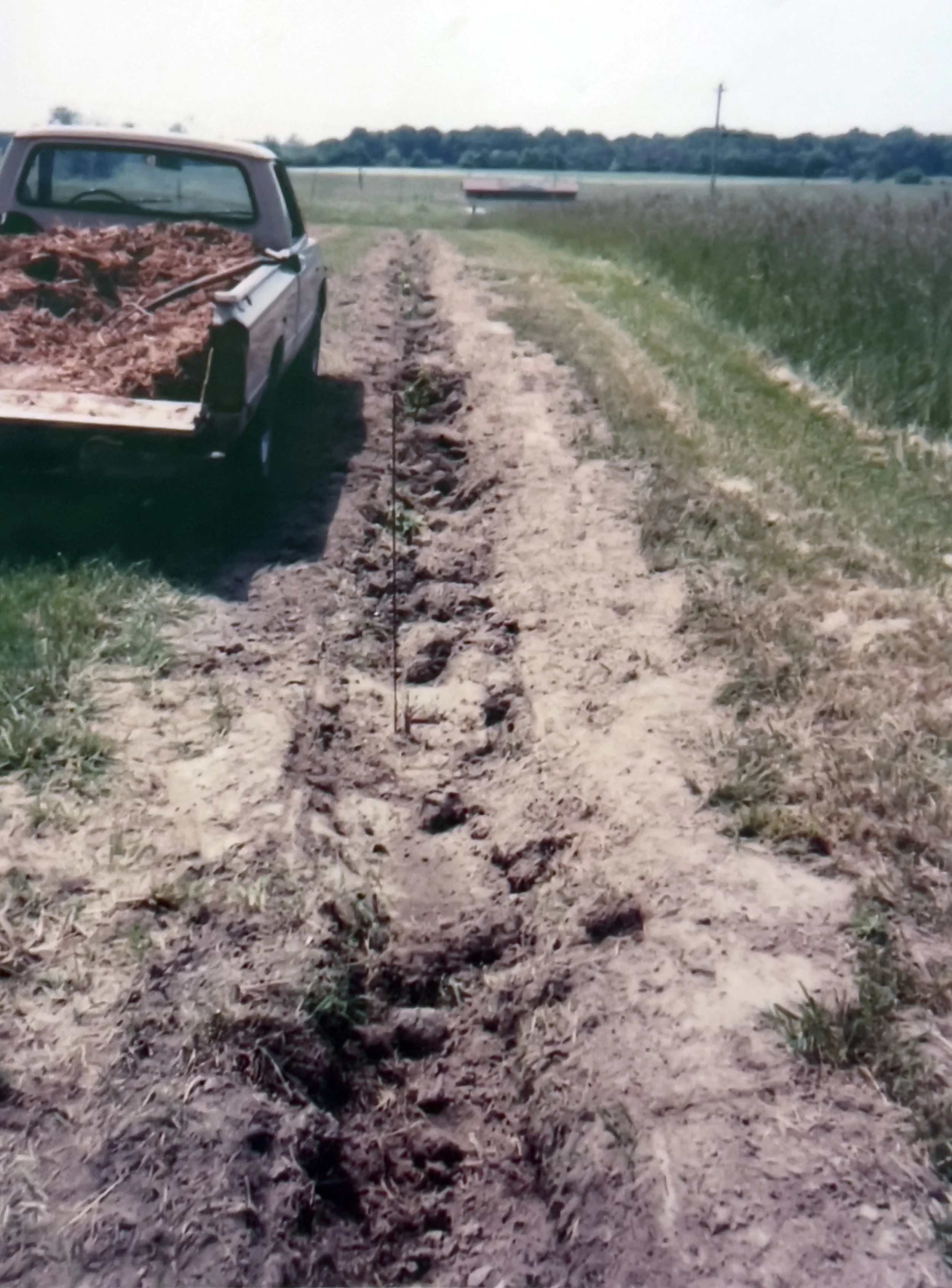
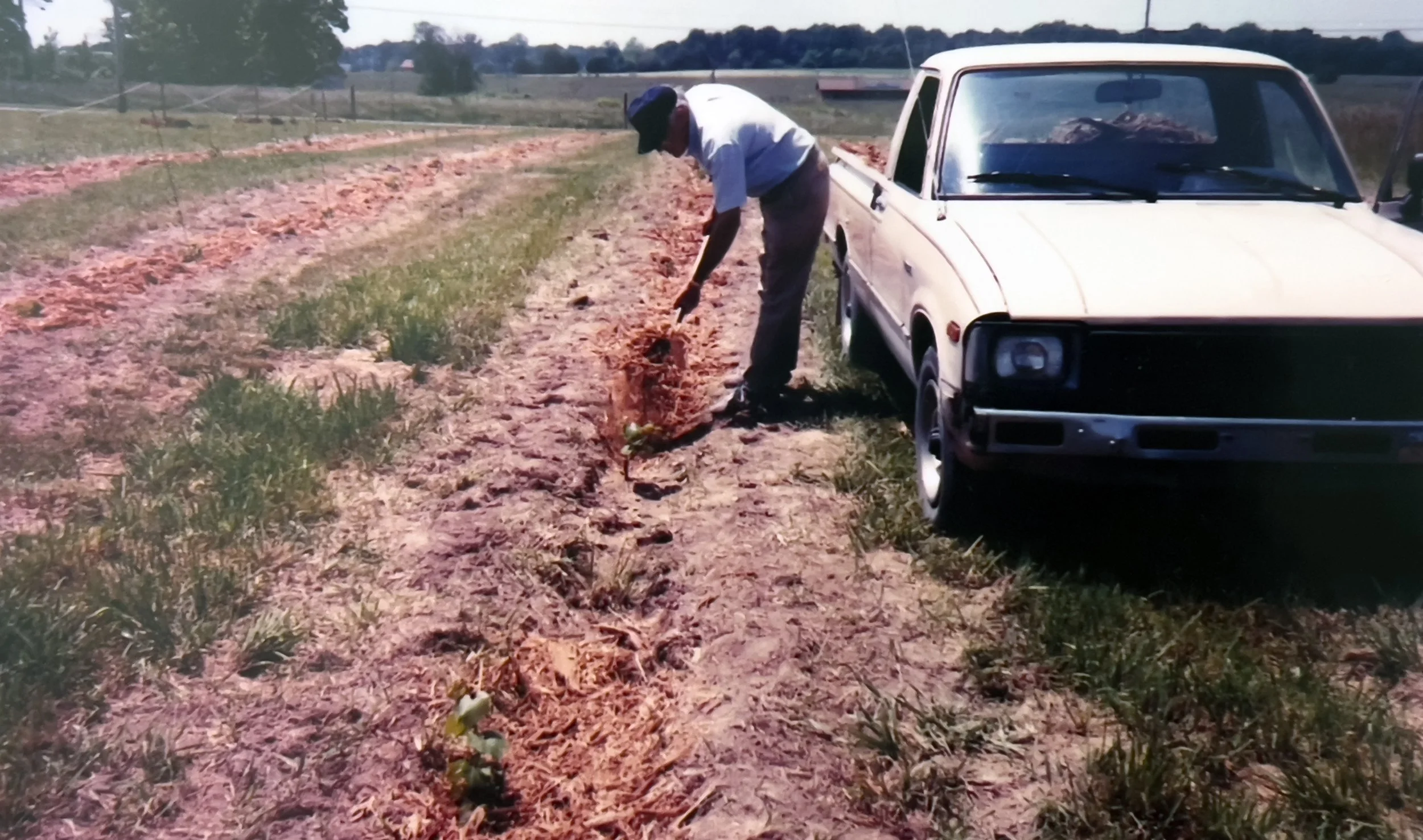
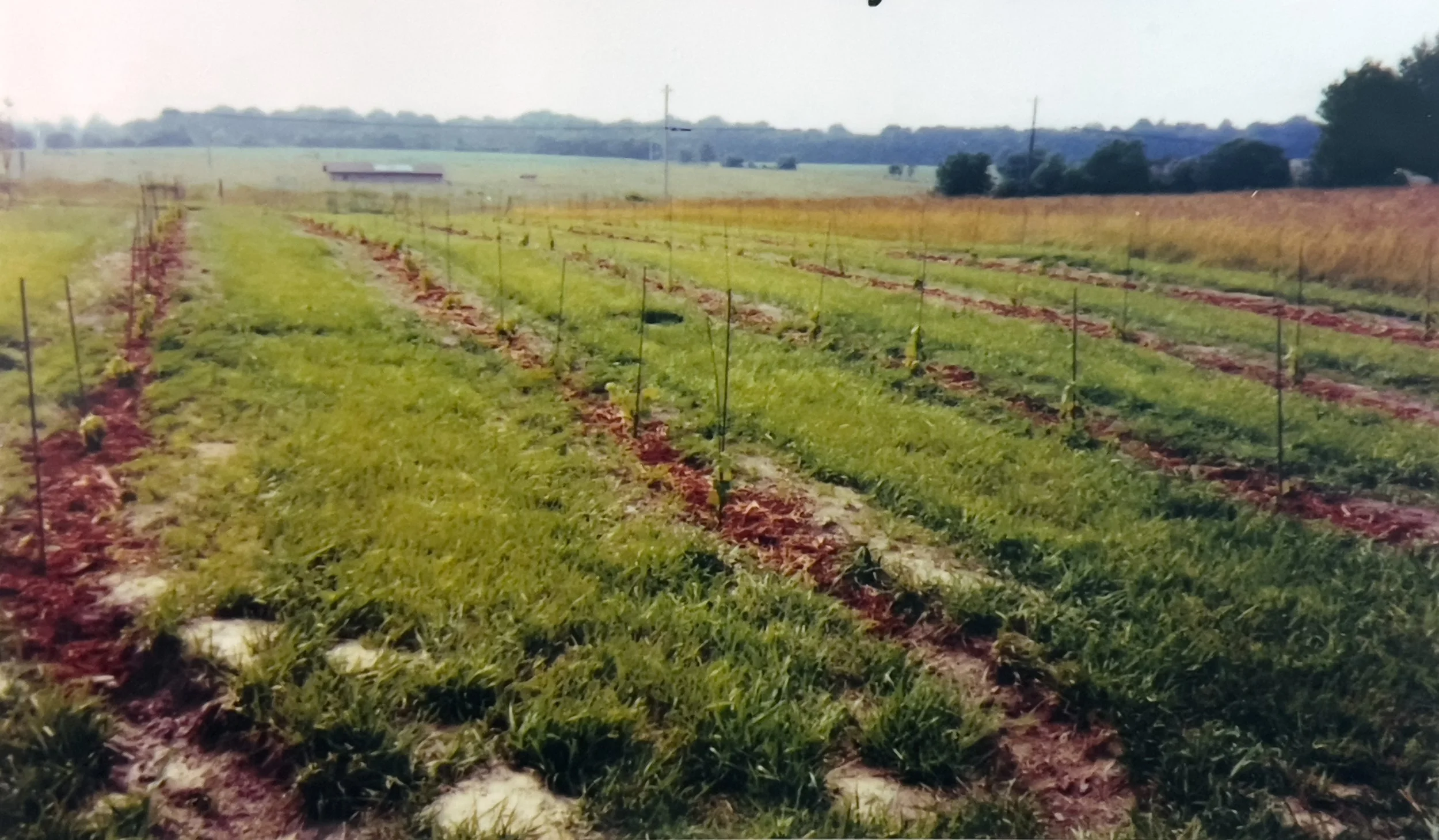
Wheeler said. "I had very little experience, but I planted about eight acres of grapes and went into business."
A tornado came through and cleared out most of it. Record shows that it was an F2-Category that hit his new crop in Fentress County in May 1974.
The Grape & Wine Act
The Grape and Wine Act voted in by the Tennessee State Legislature in 1977 was meant to encourage grape growing in the state, thus permitting the production and sale of wine at retail. Fay’s first commercial wine grape vineyard included Native American and European varieties.
It was at that same time that Fay began working with The University of Tennessee’s test planting site, The Plateau Experiment Station at Crossville. “They had a good little vineyard there with 15 different varieties and I made an agreement with them to help them harvest and I would give them grapes to do their analysis and then I could buy them for 20 cents per lb and it gave me an opportunity to check out the various varieties,” said Wheeler.
The First Licensed Winery in Tennessee
In 1980, Fay Wheeler’s Jamestown venture became the first licensed winery in Tennessee in modern times. Most of the grapes were from his various Tennessee growers.
Over the years, Wheeler assisted more than 25 wineries and vineyards starting the same adventure he began in 1977, helping the industry grow and prosper.
Wheeler arguably pioneered the Tennessee wine making industry, and subsequently he has also become very active in the many state, national and international wine and grape organizations. He became a Master of Knight in the Brotherhood of Knights of the Vine in 1985, headquartered in California. He later became Supreme Knight. He has served as the Grand Marshal on the Grand Council of La Croix de la Bourgogne (The Cross of the Burgundy), headquartered in Dijon, France. He was one of only four Americans who have ever served as Grand Council member in this 14th century order. He was an active supporter of the University of Tennessee and served several years on an advisory board, and chaired a scholarship committee. He served as President of the Tennessee Grape and Wine Society in 1989 and was on the Board of Directors for over a decade. In 1990, he was awarded the prestigious “Homer Blitch” trophy for outstanding services toward the goals of the Tennessee Grape and Wine Society. He was also recognized in the year 2000 by a federal/state agricultural program for the development of value-added agriculture (grapes and wine) in Tennessee.
Undoubtedly, Wheeler saw much success in his wine-making career. He produced wines and champagnes that have won international gold medals. Additionally, he served as a wine judge at various national and international competitions and organized and judged numerous amateur wine competition events.
Stonehaus Winery Opens
After 10 years in business, he sold Highland Manor and opened Stonehaus Winery in 1990 with five partners. One of those partners, Robert “Bob” Ramsey, and his wife, Belle, were partners with Fay and his wife, Kathy, in establishing Highland Manor, the first winery in the state in 1980 and have been partners in Stonehaus since its beginnings in 1990 when they were joined by Dr. Lloyd Hassler, Martin Clark and Jamie Clark McGuire. While Belle has been actively involved since day one, Bob retired from his successful law practice in 2010 to become more hands-on at Stonehaus. “In all these years, Bob and I have never had a cross word,” Fay said. “The Golden Team is back again!”
For 20 years, Fay Wheeler was the guiding force behind Stonehaus Winery — as well as what might be termed the “Tennessee Phenomenon” in general. Fay was a founding father of the local wine industry, if that term is appropriate to such a young region. Stonehaus has helped point the way toward a much more solidly-founded winery economy for the region.
Stonehaus Winery Opens a New Chapter in 2026
After more than three decades of shaping Tennessee’s wine industry, Stonehaus Winery is entering a new chapter. Founded in 1990 by Fay Wheeler and a close-knit group of partners following the success of Highland Manor, Stonehaus grew into one of the state’s most influential wineries. Under Fay’s leadership, the winery helped define what would become the “Tennessee Phenomenon,” playing a key role in building a sustainable, respected wine economy in the region.
As the winery evolved, so did its focus. To continue growing the Stonehaus legacy and reach more wine lovers beyond its original location, the decision was made to move winemaking and operations to a new facility and transition to a distribution-only model. This shift allows Stonehaus to concentrate fully on crafting quality wines while expanding availability through liquor stores, grocery stores, and restaurants. Though the storefront chapter has closed, the spirit, history, and passion behind Stonehaus Winery continue—now poured into bottles shared far and wide.
Awards & Recognitions
(partial list)
1971
Planted first wine grape vineyard in Jamestown, Tennessee
1977
Represented University of Tennessee (UT) at Plateau
Experiment Station at Crossville for TVOS vineyard project
UT Advisory Board; Board Member and Judge Tennessee Viticultural & Oenological Society (TVOS)
1978
Featured in Wines of America by Leon D. Adams
1980
Founded Tennessee’s first commercial winery in modern times, Highland Manor in the dry county of Jamestown, Tennessee; Cabernet Sauvignon sold at Cancer Society Auction in Nashville to Mario Ferrari for $425.00; Represented at The American Wine Society Conference, The Winegrowing Revolution, Grand Island, New York
1989
President, TVOS
1982
Tennessee Farm Winery Association (TFWA) organized
Advisory Board Member
1983
Member Madrid Spain International Group; Viticultural Advisory Board (VAB), advisory board to the governor, created with Fay Wheeler as a founding member
1984
Madrid Gold Medal Winner
1989
Grand Marshal of the 14th Century L’Ordre Ducal de la Croix De Bourgogne (Fay was one of only four Americans to ever serve as Marshal of the Grand Council of this order)
1990
Homer Blitch Award
1991
Opened Stonehaus Winery
1996
Instrumental in lobbying to pass wine legislation
1999
Featured in: Longstreet Highroad Guide to Tennessee Mountains by Vernon & Kathv Summerlin
2001
Southern Living Magazine feature article
2002
Featured in: Romantic Tennessee by Carol & Dan Thalimar
2005
Supreme Knight, Brotherhood of the knights of the Vine
2008
Wines of the South (Regional Wine Competition) Awards: one gold, one silver and two bronze awards of 439 wines in a blind tasting; Featured in Wines Across America issue of Wine Spectator; Listed in Wine Spectator; Vinifera Wine Growers Association, Seattle
2009
Wines of the South (Regional Wine Competition) Awards: one best of show award, one concordance gold award, two silver awards and one bronze award of 470 wines in a blind tasting